
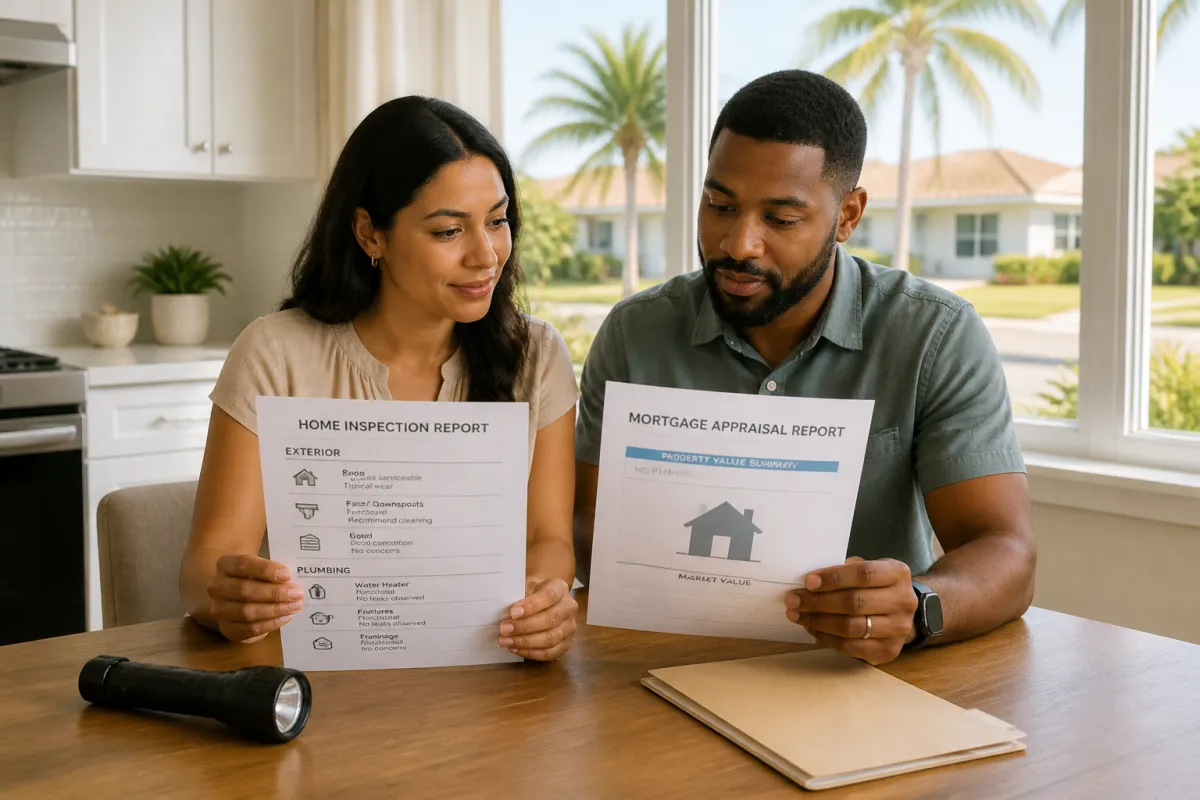
Florida Home Inspection vs. Appraisal Before Closing
Florida Home Inspection vs. Mortgage Appraisal Before Closing
Yes, either can delay closing. They do not make the same choice.
A home inspection helps you decide if the home is in good condition. A mortgage appraisal helps the lender decide if the home supports the loan amount.
Inspection issues usually involve the buyer, agent, seller, and contract. Appraisal issues usually go through the lender. They may become loan conditions.
Home inspection vs. mortgage appraisal
| Question | Home inspection | Mortgage appraisal |
|---|---|---|
| Main purpose | Help the buyer understand the home's visible condition. | Give the lender an independent opinion of market value. |
| Who orders it? | The buyer usually chooses and hires the inspector. | The lender usually orders it through its appraisal process. |
| Who pays? | The buyer usually pays the inspector. | The buyer often pays the appraisal fee. The lender still orders it. |
| What does it review? | Visible parts, such as the roof, plumbing, electrical system, HVAC, structure, and water signs. | Value, home features, condition, location, recent sales, and loan-related property concerns. |
| Is it a full condition review? | No. It is detailed, but has limits. You may need a specialist. | No. An appraisal does not replace an inspection. |
| Can it affect closing? | Yes. It may lead to repair talks, more inspections, or a contract choice. | Yes. A low value, repair condition, or missing information may affect the loan or timing. |
The Consumer Financial Protection Bureau explains that inspections and appraisals serve different purposes and that buyers generally need both.
Can a home inspection stop or delay closing?
An inspection can delay closing. It may lead to more tests, repair talks, or a contract choice.
A general inspection may report roof wear or a stained ceiling. It may also report an older electrical panel, poor drainage, or other visible concerns.
It may suggest a roofer, electrician, plumber, engineer, mold professional, or other specialist. These extra reviews take time.
The buyer and seller may agree on repairs, a credit, a price change, or no change.
If your contract has an inspection contingency, it may let you negotiate or cancel during a set time. The signed contract controls.
Read it with your real estate agent. Ask a Florida real estate attorney when needed.
An inspection does not automatically make the seller do repairs. It also does not automatically let the buyer cancel without a penalty.
Can a mortgage appraisal stop or delay closing?
An appraisal can delay closing if the report is late. It can also delay closing if the value is below the contract price.
Other causes include required repairs or more lender questions. A low appraisal does not mean the home is defective.
It means the appraiser's value opinion is below the agreed price. The buyer and seller may renegotiate.
The buyer may bring more cash. The parties may use another option allowed by the contract and loan plan.
An appraisal may also be subject to repairs or completion. Some loan programs and lenders have property standards.
A required repair, paperwork, or reinspection may add time. See what a low mortgage appraisal can mean for a Florida offer price and whether a Florida mortgage can close when the appraisal requires repairs.
What a Florida home inspection does and does not cover
Florida requires people who do home inspections for compensation to have a state home inspector license. You can check a license through the Florida Department of Business and Professional Regulation.
A home inspection is a visual review. It is not a warranty.
It cannot promise to find every hidden problem. It also cannot promise that every system will keep working.
It may not answer every question about permits or code compliance. It may not answer questions about insurance eligibility, flood risk, mold, pests, seawalls, or future repairs.
You may need records or a specialist.
Florida issues worth checking early
- Roof: Ask about age, leaks, repairs, and insurance requirements. A roof concern may affect the buyer, insurance, lender, or more than one.
- Flood and water: Review disclosures and look for water signs. Price flood insurance before the inspection deadline.
- Electrical: Ask a licensed electrician about the condition and repair scope. Do this when the inspector flags a panel or wiring.
- Permits: Check records if an addition, enclosure, or major improvement is unclear. See our guide to buying a St. Petersburg home with an open permit.
- Waterfront structures: Docks, lifts, and seawalls may need a separate inspection or records review.
- Condos and HOAs: Review the association's budget, insurance, rules, reserves, and special assessments. A unit inspection does not replace this review. See St. Petersburg condo mortgage financing.
What a mortgage appraisal does and does not cover
The lender usually arranges the appraisal. The buyer often pays for it.
The appraiser looks at the home's features, condition, location, and recent sales. The appraisal is not a detailed buyer inspection.
The appraiser may notice an obvious problem. However, the appraiser does not test every outlet, appliance, pipe, or air-conditioning component.
For most covered first-lien mortgage transactions, federal rules require the lender to provide a copy of the appraisal promptly after completion. The lender must provide it no later than three business days before closing.
Exceptions and waiver rules can apply. Ask your lender if you are unsure.
Read how to review a Florida mortgage appraisal before closing.
When the inspection and appraisal disagree
The reports may differ because they answer different questions.
An inspection may flag an aging roof while the appraisal still supports the price. The home may have a value that works for the loan.
Yet, repair risk may still matter to you. The reverse can also happen.
An inspection may not find a major defect. The appraisal may raise a value or visible-condition concern.
- Read both reports. Do not rely only on a summary email.
- Identify the owner of each issue. Ask the lender if an item is a loan condition.
- Check your deadlines. Ask your agent how inspection, financing, and appraisal terms affect your options.
- Use the right expert. Get a roofer, electrician, engineer, or other qualified professional when needed.
- Save records. Keep invoices, permits, photos, and specialist reports.
Send appraisal questions through the lender. If you find a factual error or missing comparable sale, ask about the lender's reconsideration-of-value process.
Do not contact the appraiser directly unless the lender tells you to do so.
A practical timeline before closing
- After acceptance: Read the inspection and financing deadlines. Schedule the inspection quickly.
- During the inspection period: Attend if you can. Order specialist reviews early.
- During loan processing: Give documents and check with the lender about the appraisal.
- When reports arrive: Separate buyer concerns from lender conditions.
- Before closing: Confirm repairs, permits, insurance, appraisal conditions, and final walkthrough items.
If new damage happens after the inspection, tell your agent and lender at once. See what to do after hurricane damage before a Florida mortgage closing.
Frequently asked questions
Is a home inspection required for a Florida mortgage?
Not always. A lender may require an appraisal or another value review.
A buyer inspection is separate. It is usually recommended to protect the buyer.
The contract and loan program may add requirements.
Can a seller see my inspection report?
That depends on the contract, local practice, and how the buyer chooses to negotiate. Ask your agent before sharing the report.
Will a low appraisal cancel my Florida contract?
Not by itself. It may create a financing gap or require a new plan.
Your options depend on the report, loan, seller response, and contract terms.
Does an appraisal check flood damage or insurance eligibility?
Not as a full investigation. The appraiser may note visible condition concerns.
Buyers should still check flood history, insurance cost, roof condition, and water-related risks.
Official resources
- Consumer Financial Protection Bureau: Schedule a home inspection
- Consumer Financial Protection Bureau: What are appraisals and why do I need to look at them?
- Fannie Mae: Understanding home appraisals
- Fannie Mae: Understanding your home inspection report
- Florida Department of Business and Professional Regulation: Home inspector FAQs
Compliance note: This article is for education only. It is not legal, tax, insurance, appraisal, inspection, or repair advice. Loan programs and terms vary. Financing is subject to underwriting, credit approval, appraisal, property conditions, and other lender requirements. This is not a commitment to lend.