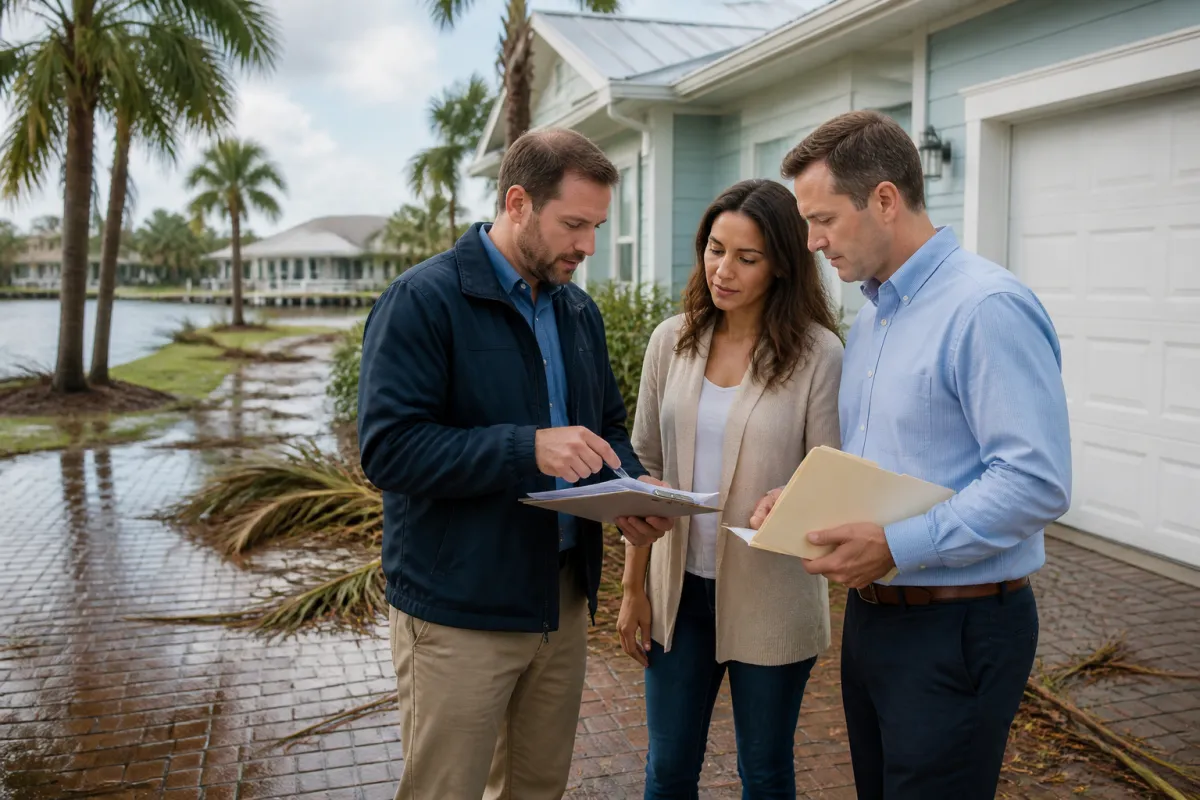
Florida Home Damage Before Closing: What Buyers Should Do
If a Florida home is damaged before closing, tell your lender and real estate agent right away. Do not assume the loan can close as planned.
The damage may affect the home’s safety, value, insurance, contract, or closing date. A small roof leak may need a different response than floodwater, major roof damage, or unsafe wiring.
This guide covers the usual steps for buyers in St. Petersburg, Pinellas County, and across Florida. Your contract, lender, insurer, appraiser, closing agent, and loan program control your file.
First, report the damage
Tell your loan officer and real estate agent as soon as you learn about possible damage. Ask your agent to notify the listing side and closing agent.
Only take photos or videos if it is safe. Save dated photos, repair bids, invoices, permits, insurance letters, and inspection reports.
Ask these questions:
- What damage is confirmed?
- Is the home safe to enter?
- Has the seller opened an insurance claim?
- What repairs are planned?
- Are permits or inspections needed?
- Does the lender need a reinspection or new appraisal?
- Does the closing date need to move?
Do not close before the file is cleared
Closing creates a major financial obligation. Before signing, make sure you understand the damage, repairs, value, and insurance.
This does not mean every small issue stops a closing. The lender must decide whether the property still meets loan and investor rules.
For loans sold to Fannie Mae, the lender must take prudent and reasonable steps to decide whether the disaster materially changed the property. The lender decides whether more inspection, repair proof, or a new appraisal is needed. Fannie Mae does not require the same review for every disaster.
Read Fannie Mae’s disaster property guidance.
What may happen next
The property may need another review
The lender may request a reinspection, an appraiser completion report, or a new appraisal. It may also ask for photos, contractor bids, permits, and proof of completed work.
A final walk-through is still important. It lets you check the home near closing. It does not replace a lender review or a licensed home inspection.
The seller may need to handle repairs
The seller may need to repair the damage, provide claim records, or sign a contract change. The exact duty depends on the purchase contract and the facts.
Do not sign a repair agreement, release, or extension until you understand the work, cost, timing, and payment terms. Your agent and a qualified Florida real estate attorney can help review the contract.
The lender reviews the loan again
The lender must confirm that the property remains eligible for the loan program. It must also confirm that your homeowners insurance meets its requirements.
A storm can change insurance cost or availability in Florida. That may change your cash to close or monthly payment. Read more about how homeowners insurance affects mortgage qualification in St. Petersburg.
The closing date may move
Dry-out work, repairs, permits, inspections, insurance review, or lender review may cause a delay. Put every extension in writing.
If your rate lock may expire, tell your loan officer early. An extension may be available, but fees and terms vary. See what can happen when a Florida rate lock expires before closing.
Your contract controls many choices
Your signed purchase contract is central. It may address casualty damage, repairs, insurance money, access, escrow, extensions, cancellation, and earnest money.
Florida does not have one answer for every damaged home. The form, addenda, deadlines, damage, and later agreements all matter. Florida Realtors explains that hurricane-related rights can turn on risk-of-loss and force-majeure language.
Review Florida Realtors’ contract discussion.
If your deposit or right to cancel may be at risk, get advice before signing anything. Read Florida earnest money: denial, low appraisal, or delay.
Flood damage needs extra review
Flood damage is different from rain entering through a damaged roof. Standard homeowners insurance often does not cover flood damage. Coverage may come from the National Flood Insurance Program or a private flood policy.
Ask for the water level, cleanup plan, drying records, and repair scope. Damage may affect drywall, floors, wiring, appliances, insulation, and HVAC equipment.
FEMA advises policyholders to report flood losses promptly and document damage with photos and video. Policy terms and limits control what is covered. Review FEMA’s flood claim steps.
In coastal areas such as St. Petersburg and Pinellas County, wind-driven rain, storm surge, roof damage, and drainage problems may create different claims and repair needs.
Can repairs happen after closing?
Sometimes a lender may allow a repair escrow. This is money held for approved work after closing. It is not automatic.
Approval depends on the loan program, lender, investor, repair type, safety concerns, insurance, and repair cost. Major or structural damage may require more work before closing.
Fannie Mae guidance allows some damaged properties to be delivered without all repairs being complete when its conditions are met. Those conditions include insurance coverage and enough funds to complete the work. This does not guarantee approval by your lender.
See the Fannie Mae requirements.
Will the appraisal need to be redone?
Not always. The lender decides what review is needed. A serious loss or possible value change may lead to a new appraisal.
A lower value may affect the loan amount. You may need to renegotiate, bring more cash if allowed, or use a contract option. Read Low Florida home appraisal: what buyers can do.
For a condo, damage to the unit or shared areas may create a separate financing issue. Examples include a damaged roof, elevator, seawall, or other common feature.
How conventional, FHA, and VA loans can differ
Conventional loans
Many conventional loans follow Fannie Mae or Freddie Mac rules, plus lender rules. The lender may require a reinspection, new appraisal, repair proof, insurance evidence, or a delay.
FHA loans
FHA disaster procedures can change. On June 27, 2025, HUD Mortgagee Letter 2025-19 removed mandatory blanket pre-endorsement inspection and repair-escrow requirements for certain FHA forward loans in Presidentially Declared Major Disaster Areas.
HUD now requires the mortgagee to use reasonable due diligence and choose a risk-based response before endorsement. Your lender may still require inspections, repairs, or other documents. Read HUD Mortgagee Letter 2025-19.
FHA property and underwriting rules still apply. Water, roof, electrical, or safety problems can delay the file. See FHA loans in St. Petersburg.
VA loans
A VA loan does not require a perfect home. The property must remain safe, sound, and sanitary.
VA guidance says a disaster after appraisal but before closing may require lender and Veteran certifications. If the value may have declined, VA guidance calls for a new appraisal. Read VA’s natural-disaster guidance.
VA property requirements also matter. Damage that affects a safe, sound, sanitary home may delay closing. Read the VA home loan buyer guide for St. Petersburg.
When should you pause?
Pause and ask for written answers when the damage is not known, repairs are incomplete, insurance is unclear, or the lender has not cleared the property.
Pay close attention to hidden moisture, roof damage, unsafe wiring, structural damage, and possible lower value. Get the inspection that fits the problem.
Before signing, confirm that the home’s condition still matches what you agreed to buy. You can also review how to compare mortgage loan estimates in Florida.
Buyer checklist
- Put safety first.
- Tell your lender and agent right away.
- Save dated photos and written damage details.
- Ask for insurance and repair updates.
- Request bids, permits, and invoices.
- Ask if a reinspection or new appraisal is needed.
- Confirm that your insurance still meets loan rules.
- Put every contract change in writing.
- Complete a careful final walk-through.
- Do not close until the property and loan are cleared.
Official resources
- Fannie Mae: Properties Affected by a Disaster
- Fannie Mae Property Valuation FAQs
- HUD Mortgagee Letter 2025-19
- VA Guidance on Natural Disasters
- FEMA NFIP: Start a Claim
- Florida Realtors: Hurricanes, Transactions and Contract Clauses
Compliance note: This article is for education only. Your purchase contract, lender, insurer, appraiser, closing agent, and loan program control your file. Programs and terms vary.
All loans are subject to underwriting and credit approval. This is not a commitment to lend.