
How Mortgage Loan Officers Can Succeed in a Changing Market
The New Guard in Mortgage: How Loan Officers Build a Business That Lasts
Originally Recorded: 8/16/2024
Updated: 8/14/2026
If you are trying to build a mortgage business by recreating what worked five years ago, that may be the problem.
The people I think of as the new guard are having a different conversation.
They are not sitting around trading stories about how many loans they closed during some great market. They are asking a much more useful question:
How do we get the next loan in the environment we are actually in?
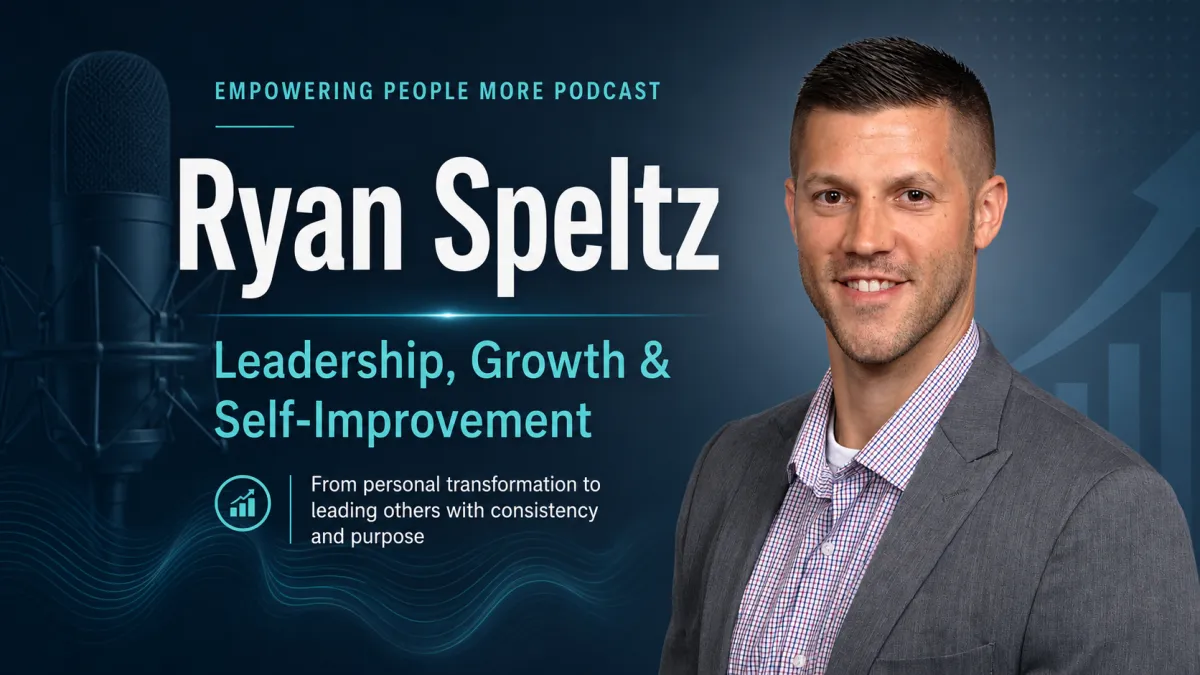
That was one of the conversations I had with Eddie Perez when I joined him on the Empowering People More podcast. We talked about mortgage, leadership, sobriety, consistency, marketing, specialization, and what it really takes to stay in this business when things stop being easy.
A lot has changed in the mortgage market since that conversation, but the basic lesson has not.
As of August 13, 2026, Freddie Mac reported an average 30-year fixed mortgage rate of 6.67%. July existing-home sales were running at a seasonally adjusted annual rate of 4.06 million, down 1.7% from June but slightly above the prior year.
People are still buying homes. Loans are still closing. Business is still happening.
The question is whether your business is built to earn its share of it.
This conversation with Eddie Perez, CEO of Equity Prime Mortgage, on the Empowering People More podcast goes deeper into the experiences behind these lessons, including my path into mortgage, sobriety, leadership, storytelling, and what I think the next generation of mortgage professionals needs to get right.
Stop Building Around the Market You Wish You Had
One thing I said in that conversation has stuck with me.
The old guard talks about war stories.
The new guard talks about how to build around where we are.
That does not mean experience has no value. Experience matters a lot. The problem starts when experience turns into nostalgia.
Knowing what worked in a completely different mortgage market does not automatically tell you what will work now.
If your strategy depends on rates dropping, volume exploding, leads getting cheaper, a company feeding you business, or consumers suddenly behaving like they did during another cycle, you do not really have a strategy.
You have a hope.
The better question is simple:
What works right now, and how can I get better at it?
That changes where you put your time.
It changes what you study.
It changes how you market.
It changes who you spend time around.
And it changes how much energy you waste complaining about things you cannot control.
Hard Markets Sometimes Require Low Gear
During the interview, I compared difficult seasons to shifting into low gear.
Sometimes you are climbing the hill.
You are not going 100 miles an hour. You are not breaking records. You are not getting instant reinforcement every time you do the work.
You are just climbing.
That is part of business.
Early in my mortgage career, I learned that the hard way. I entered the industry in January 2015 after years of working jobs where long hours were normal. I had worked in mental health, sporting goods, retail management, and spent stretches working 80-hour weeks.
Then I got into mortgage and barely closed anything for months.
Five months in, there was not much evidence telling me I had made a great career decision.
A couple of months later, I had roughly a $1.4 million production month.
That did not happen because somebody handed me a better market overnight.
I stayed.
I worked.
I learned.
I lasted long enough for the work to start producing something.
That lesson has followed me throughout my career.
There have been plenty of moments where quitting would have made sense emotionally. There have been months where volume dropped. There have been market changes. There have been business decisions that did not work.
The answer cannot always be to start over.
Sometimes you need to shift into low gear and keep climbing.
Consistency Starts With Trusting Yourself
My biggest leadership change did not actually start inside the mortgage business.
It started when I got sober.
At the time of this interview, I had been sober from alcohol for just over three years. I told Eddie that quitting drinking did not magically make me a different person the next morning.
The bigger change happened over time.
I became more consistent.
I started trusting myself more.
That matters more in business than I understood when I was younger.
When you do not trust yourself, every decision becomes a committee meeting.
You ask ten people what they think.
You get ten answers.
Then you are more confused than when you started.
Once I started rebuilding that trust in myself, decision-making became simpler. I could gather the information I needed, think through the situation, make a decision, and move.
If I was wrong, I could adjust.
That is leadership.
Leadership is not knowing that every choice will work.
It is being steady enough to make the next good decision when something does not.
Your Client Does Not Need You to Panic With Them
This matters in mortgage because emotion is part of the transaction.
A buyer gets nervous.
A closing changes.
Documentation comes up.
Something takes longer than expected.
A person calls you stressed.
That does not mean you need to become stressed with them.
One of the lessons I shared with Eddie was that leadership requires managing the emotion of the situation.
If your client is freaking out and you immediately match that energy, now you have two people freaking out.
That does not solve anything.
Your job is to understand the issue, communicate clearly, explain the options, and help the people involved make the next decision.
Calm is part of the service.
Being Fast, Cheap, and Always Available Is Not a Brand
For years, mortgage professionals have leaned on some version of the same promises:
I answer all the time.
I close really fast.
I have great pricing.
Those things can matter. They are just weak places to build your entire identity.
There will almost always be somebody who can compete with you on price at a specific point in time.
Technology keeps making speed easier.
And being available every second of every day is not the same thing as being valuable.
The stronger position is understanding people.
Can you explain a complicated situation clearly?
Can you find the question the client does not know they should ask?
Can you help a real estate agent think through a difficult transaction?
Can you build enough trust that somebody wants you involved before they ever ask what your rate is?
Those things are harder to copy.
Stop Telling People You Provide Value
One of my favorite ideas from the conversation was around how professionals talk about value.
You do not create value by posting a giant list explaining everything you do for people.
You create value by doing something useful and then telling the story about what happened.
That distinction matters.
Think about the average real estate post.
“We got another one under contract.”
Great.
But what does that teach the person reading it?
What did the buyer struggle with?
Why did they think buying might not work?
What changed?
What did the agent notice?
What did the lender solve?
What should another person in the same situation understand?
That is where the story becomes useful.
Instead of showing people how busy you are, show them that you understand people like them.
Good Marketing Helps Someone Recognize Their Own Story
People connect with stories because they can see themselves inside them.
That is where a lot of mortgage and real estate marketing gets lost.
The professional makes themselves the hero.
Look at my closing.
Look at my production.
Look how fast I got this done.
Look at this award.
Look how many units I closed.
There is nothing wrong with being proud of good work. The problem is thinking your scoreboard is automatically useful to the consumer.
Most clients do not care about your scoreboard nearly as much as you do.
They care whether you understand their situation.
A better story might be about the first-time buyer who assumed homeownership was still years away and decided to sit down and learn what the numbers actually looked like.
It might be an investor trying to understand which financing route fits the property they are considering.
It might be a family whose previous transaction left them confused and who wants somebody willing to slow the process down and explain it.
Tell those stories well and the right person recognizes themselves.
That is marketing.
You Probably Do Not Need 18 Lead Sources
Another trap I see loan officers fall into is thinking more channels automatically means more business.
They want referral partners.
Paid leads.
Social media.
Video.
Events.
Email.
Database marketing.
Open houses.
Builders.
Financial planners.
Divorce attorneys.
Investors.
First-time buyers.
Renovation.
Government loans.
And 11 other things before lunch.
Then they wonder why nothing is working.
You do not have to be everywhere.
You need something that works.
During the interview, I said that a huge percentage of somebody’s business can come from one channel if they become really good at it.
That does not mean you can never add another channel.
It means you should earn the right to add it.
Get one thing producing first.
Then build from there.
Specialization Makes You Easier to Remember
If you are good at renovation loans, go deep.
If you work heavily with FHA borrowers, learn the current guidelines and overlays that affect the loans you are actually working on.
If you understand investors, become somebody local investors want in the conversation.
If your strength is first-time buyers, get incredibly good at explaining the process without making people feel stupid for asking questions.
A niche is not just a marketing label.
It should represent actual knowledge.
When somebody says, “I know a loan officer who is really good with that,” you have built something useful.
Mortgage programs, underwriting requirements, lender overlays, qualifications, and product availability can change, so any program-specific guidance should always be checked against current requirements before somebody makes a financing decision.
Focus Forces You to Admit What Is Just Busy Work
One reason I liked working through The 12 Week Year framework was the forced focus.
We talked during the interview about taking a few important goals and breaking them into the actions required to move them forward.
The part people struggle with is not usually writing the goals.
It is admitting that a lot of the other stuff they are doing is not really moving anything.
Busy work feels safe.
You can answer email.
Clean up your CRM.
Move tasks around.
Build another spreadsheet.
Redesign something.
Sit in meetings.
Research another tool.
And at the end of the day you can tell yourself you were busy.
The harder question is:
Did I do the work that actually creates the result I said I wanted?
That is a different standard.
Do More of What Is Already Working
There was a point in my own business where I started noticing something obvious.
I was paying attention to what worked and then doing more of it.
That sounds almost too simple.
But look at how many professionals do the opposite.
Something starts working, they get bored, and they start something else.
They have a good month, stop doing the actions that created it, and then 90 days later wonder why the pipeline disappeared.
You cannot keep harvesting something you stopped planting.
Consistency is not doing the same thing forever.
It is giving good work enough time to show you whether it works.
When you find something that produces the right relationships, conversations, and opportunities, stay with it long enough to get good.
The Basics Usually Win
We also talked about elite athletes and why the basics matter.
The lesson was not really about sports.
It was about reps.
The people who become exceptional at something usually spend a ridiculous amount of time doing work that looks boring from the outside.
That applies to mortgage.
Follow up.
Know the guidelines.
Ask better questions.
Call people back.
Explain the process.
Study.
Build relationships.
Tell good stories.
Stay in touch.
Solve the problem in front of you.
Then do it again.
Nobody wants to hear that the secret might be getting unusually good at ordinary things.
But that is often the answer.
Work-Life Balance Might Be the Wrong Goal
Eddie and I also talked about balance.
I described what I want as harmony.
Mortgage is part of life. Family is part of life. Health is part of life. Work is part of life.
Trying to split every part into perfectly equal pieces is not realistic for me.
There are times I need to step away and take a call.
There are also times I need to text somebody back and tell them I am with my family and I will call them in the morning.
Both can be true.
The point is not to be available every second.
The point is to create expectations and a business that can live inside the life you actually want.
That became even more real for me as my wife and I prepared to become parents. My definition of a good business could not only be production.
It also had to support the life we were building.
What Does the New Guard in Mortgage Look Like?
The new guard is not an age group.
It is a way of operating.
It looks like:
Building around the market that exists today.
Measuring what is actually producing business.
Getting better at fewer things before adding more.
Using stories to help people recognize themselves.
Knowing your specialty well enough to deserve the reputation.
Managing emotion instead of spreading it.
Making decisions instead of endlessly polling everybody else.
Protecting family and health while still doing serious work.
Staying consistent after a good month.
Asking for help when you need it.
Sharing the real story instead of fronting like everything is perfect.
That last one matters.
One reason I created One Man’s Journey was to help people share what they have actually lived through.
Everybody has something.
The problems you are experiencing are rarely yours alone.
And when somebody is willing to talk about the real part of the journey, other people stop feeling like they are the only ones dealing with it.
That is good leadership.
It is also good business.
People connect with people.
Build for the Market You Have
The current mortgage market still requires real work.
Freddie Mac’s August 13, 2026 reading put the average 30-year fixed mortgage at 6.67%. NAR reported July existing-home sales at a 4.06 million annualized pace with 4.6 months of unsold inventory.
There is business.
There are buyers.
There are sellers.
There are referral partners looking for people who can help them.
You just cannot assume the market is going to build your business for you.
Get clear about what you do well.
Find the work that creates results.
Tell the stories that help people understand why it matters.
Keep doing the basics.
And when the hill gets steep, shift into low gear and keep climbing.
Do the right work in the right order.
Ryan Speltz
FAQ
How can a mortgage loan officer succeed in a difficult market?
Focus on controllable actions. Build strong referral relationships, study the loan types and clients you serve, communicate clearly, track where business is actually coming from, and repeat the work that produces results. Do not build your plan around waiting for rates or transaction volume to rescue you.
Should a loan officer specialize in one mortgage niche?
Specialization can make it easier for referral partners and borrowers to understand when to call you. The niche should be backed by real knowledge, not just marketing. Any loan-program guidance should be based on current guidelines, lender requirements, borrower qualifications, and property eligibility.
What should loan officers post on social media?
Start with useful stories. Instead of only announcing closings or contracts, explain the situation, the problem, what the client needed to understand, and the lesson another buyer, seller, or agent can take from it. Protect private client information and obtain any required permission before sharing identifiable details.
Why is consistency so important in mortgage sales?
Mortgage pipelines tend to reflect work done weeks or months earlier. When prospecting, follow-up, content, or relationship-building stops after a good month, the effects may not show immediately. Consistent activity helps prevent the cycle of producing, stopping, and rebuilding from zero.
What is the difference between the “old guard” and “new guard” in mortgage?
In Ryan’s framing, the old guard spends too much time talking about how business used to work. The new guard asks what works in the current environment and builds around it. It is a mindset about adaptation, focus, service, and execution rather than an age or job-title distinction.
Ryan Speltz | NMLS# 1277170 | Creative 1st Mortgage | NMLS# 2614631 | Licensed in FL, MN, TX, AL, KY & TN. This is not a commitment to lend. All loans subject to credit approval, income verification, and property eligibility. Program terms and availability subject to change without notice. FHA loans require mortgage insurance. Down payment assistance is provided as a second mortgage lien. Restrictions may apply.