
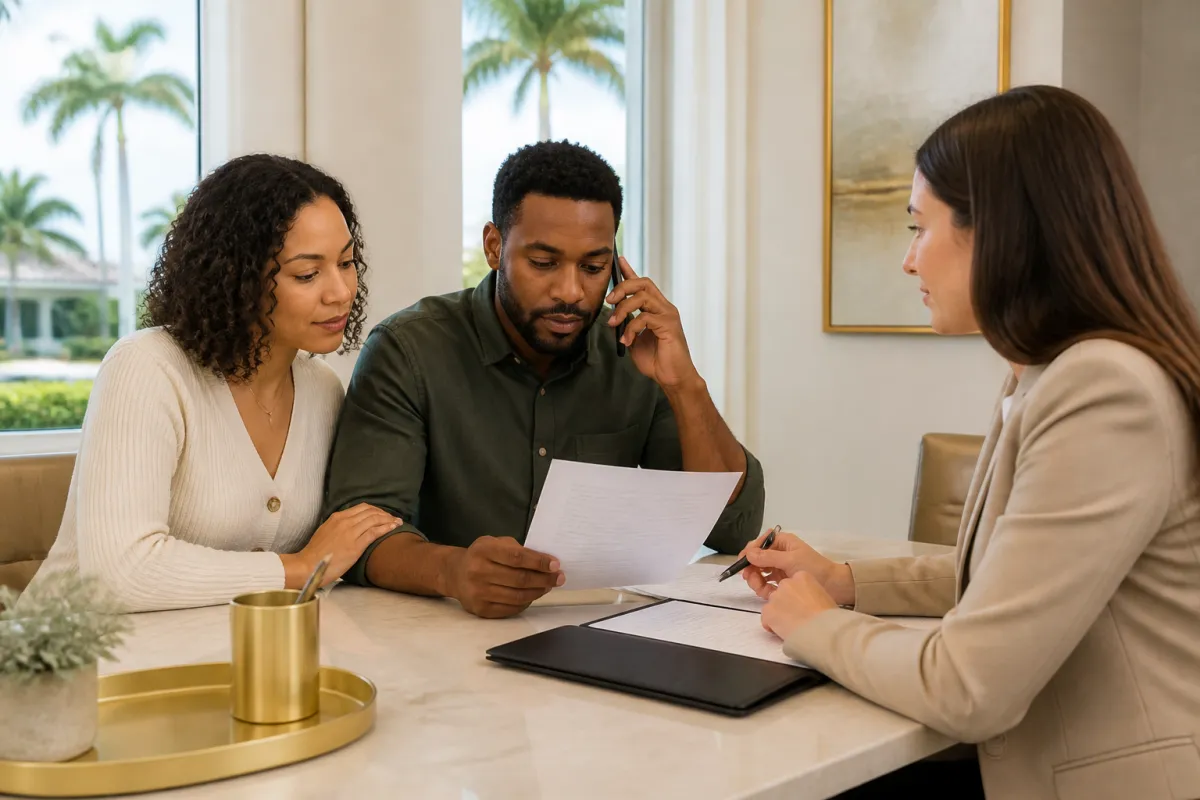
How to Protect Closing Funds From Wire Fraud in Florida
Never wire your down payment or cash to close based only on an email, text, or forwarded message. Call the actual closing office using a phone number you found and saved independently. Confirm the payee, bank details, and amount.
Then call again to confirm receipt.
This simple pause can help protect your money when closing week gets busy.
Why mortgage wire fraud happens near closing
Mortgage wire fraud is a scam that sends your money to a criminal’s account.
A scammer may pretend to be your title company, settlement agent, closing agent, lender, real estate agent, seller, or attorney. The message may include your property address, closing date, and real names from your transaction.
Those details do not prove that the payment instructions are safe. Criminals may copy an email address, use a look-alike address, or enter a real email thread.
The FBI describes a homebuyer receiving fake title-company instructions as a business email compromise example. (fbi.gov)
The most important rule
Do not send a wire until you verify the instructions through a trusted contact method.
Use a phone number you saved earlier or found on a verified company website. Do not use a phone number, link, or reply address from an unexpected message.
A closing delay is easier to address than money sent to the wrong account.
Know who handles each part of closing
Your lender handles the mortgage loan. The lender also provides loan documents, including the Closing Disclosure for most covered mortgage loans.
A title company, settlement agent, or closing agent may handle the closing documents and buyer funds. The exact role can vary by transaction.
Your real estate agent helps with the purchase process. Your agent can be a trusted contact. Your agent should not replace direct confirmation with the office receiving your money.
Ask early:
- Which office will receive your cash to close?
- Who is your named contact at that office?
- How will the office send payment instructions?
- Who can answer questions if your main contact is away?
For more about signing, funding, and recording, read Florida Mortgage Closing: What to Expect and Verify.
Warning signs that require a pause
One warning sign does not prove fraud. But any of these signs means you should stop and verify.
- The bank, routing, or account information changes.
- You receive new instructions at the last minute.
- The message creates urgency or threatens a delayed closing.
- The email address has a small spelling or domain change.
- The message tells you to click a link or call a number in the message.
- The sender asks for bank details, passwords, or identity documents by ordinary email.
- The amount does not match your expected cash to close.
- The sender tells you to keep the payment change secret.
A company logo, property address, or familiar email thread does not prove that a message is real.
What to do before sending money
Save trusted contacts early
Before closing week, save the main phone numbers for your closing office and real estate agent.
Get the numbers from a trusted source. This may be paperwork, a verified company website, or a number you saved after speaking with the office.
The CFPB recommends identifying trusted people who can confirm the closing process and payment details. A code phrase may add another check, but no single method guarantees safety. (consumerfinance.</p><p>gov)
Ask about payment methods
Ask the closing office how and when it sends payment instructions.
Ask whether it accepts a wire, cashier’s check, or another payment method. Do not assume every office uses the same method.
Review the amount separately from the wire details
Your Closing Disclosure shows loan terms, closing costs, and cash to close. For most covered mortgage loans, the lender must provide it at least three business days before closing. (consumerfinance.</p><p>gov)
Review the form and ask why something looks wrong. But the Closing Disclosure does not prove that a routing number or account belongs to the closing office.
Verify wire details separately. See What to Check on a Florida Closing Disclosure Before Signing and How Much Cash to Close on a Florida Home?.
Call the actual closing office
Call before you send the wire. Use a trusted number that did not come from the new message.
Ask the office to confirm the payee, bank name, routing number, account number, exact amount, and any reference details your bank needs.
Read back the information from the instructions you plan to use.
The Florida Bar advises buyers to independently and personally verify title-agent wire instructions before sending funds. (floridabar.org)
Confirm receipt after sending
Call the closing office again after the wire is sent.
Ask whether the funds arrived and whether the amount is correct. Keep your wire receipt and the name of the person who confirmed receipt.
Do not rely only on an email confirmation.
St. Petersburg and Pinellas County buyers
Local buyers may work with a lender, real estate agent, title company, and closing agent. Each person may send useful updates.
That does not mean each person controls the account that receives your closing funds.
Before sending money, contact the actual title or closing office handling your transaction. Use a phone number you verified independently.
For more about the title company’s role, read Owner’s vs. Lender’s Title Insurance in Florida: Do You Need Both?.
Title insurance and wire-fraud protection are different issues.
Information you should not send through ordinary email
Do not use ordinary email as the only way to send or verify sensitive information.
This includes bank account numbers, routing numbers, wire receipts, Social Security numbers, online banking passwords, debit card details, and unredacted identity documents.
If you are unsure, call the closing office through a trusted number. Ask which secure method it approves.
Be careful with unexpected links and attachments. Confirm them before clicking or downloading.
If you sent money to the wrong account
Act at once. Fast action may help, but recovery is not guaranteed.
- Call your bank or wire company. Say that you believe the wire was fraudulent. Ask for its fraud team and request a wire recall or other urgent response.
- Call the real closing office. Use a trusted number. Tell the office what happened.
- Tell your lender and real estate agent. They need to know that your funds may not have arrived.
- Save evidence. Keep emails, texts, receipts, account details, names, dates, and screenshots.
- Report the scam to IC3. The FBI directs business email compromise victims to report through the Internet Crime Complaint Center.
- Consider legal advice. A Florida-licensed attorney can advise you about your specific facts and deadlines.
The FBI says to contact your financial institution immediately and request that it contact the institution where the transfer was sent. (fbi.gov)
Do not wait until the next business day if you can act sooner.
Quick checklists
For buyers
- Save trusted closing contacts before closing week.
- Ask which office will receive your funds.
- Review your Closing Disclosure.
- Call the closing office before sending money.
- Confirm receipt after the wire.
For sellers
- Verify any change to the account for sale proceeds.
- Call the closing office through a trusted number.
- Do not send bank details in response to an unexpected message.
- Confirm when proceeds are sent.
For real estate agents
- Warn buyers and sellers about wire fraud early.
- Tell clients that email alone is not enough.
- Send clients to the actual closing office for payment verification.
- Report suspicious messages to the closing office quickly.
For family members helping with cash to close
- Confirm who may give payment instructions.
- Use the buyer’s saved contact information.
- Do not rely on a forwarded message.
- Verify the amount and recipient with the closing office.
- Keep the receipt and confirm receipt of funds.
Frequently asked questions
Will my lender send the wire instructions?
Not always. The title company, settlement agent, or closing agent may handle instructions for buyer funds. Ask your team which office will receive your cash to close.
Is a phone call enough?
No. A call to an independently verified number is one important layer. Use it with saved contacts, careful review, and receipt confirmation.
Can I trust an email thread that includes my agent?
No. Criminals may copy or access real-looking conversations. Treat every new or changed payment instruction as a reason to call the actual closing office.
What if the amount on my Closing Disclosure changes?
Ask the lender or settlement agent why it changed. Then verify payment instructions with the closing office. A valid amount change does not prove that a bank account is real.
Official resources
- Consumer Financial Protection Bureau: Beware of mortgage closing scams
- Consumer Financial Protection Bureau: Mortgage Closing Checklist
- FBI: Business Email Compromise
- FBI Internet Crime Complaint Center
- The Florida Bar: Buying a Home
Compliance note: This article is for education only. Closing procedures, payment methods, loan programs, and terms vary. Mortgage financing is subject to underwriting and credit approval and is not a commitment to lend.