
How to Use a Podcast to Build Relationships and Grow Your Business
Your Podcast Doesn’t Need a Huge Audience to Grow Your Business
A lot of people start a podcast thinking the goal is listeners.
More downloads. More subscribers. A bigger audience. Maybe sponsorships somewhere down the road.
There is nothing wrong with any of that, but I think it misses one of the biggest opportunities podcasting can create for a business.
Your podcast can be valuable before very many people listen to it.
It can give you a reason to talk to people you otherwise would not get to talk to. It can create conversations that are completely different from the normal sales conversation. It can help people understand what you care about, how you think, and whether they want to keep talking with you.
That was one of the biggest lessons behind the way I started thinking about my own podcasts.
I wasn't trying to build the next giant media company.
I wanted to create connection.
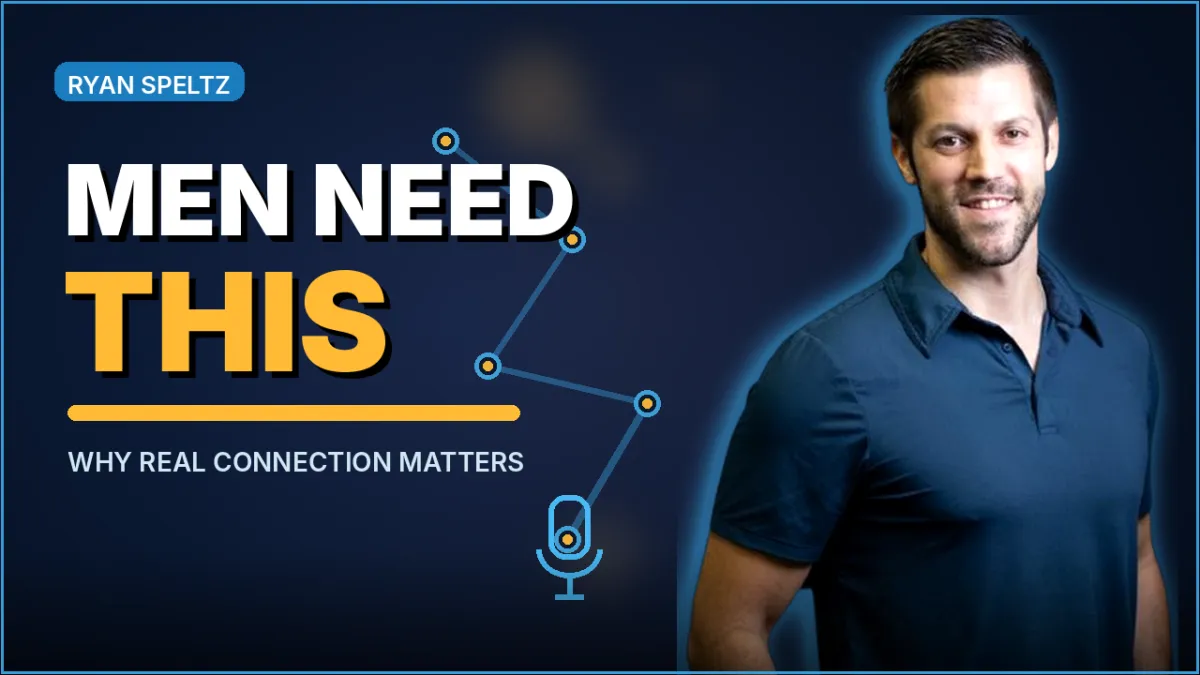
I talked through this idea in a conversation on I Made a Podcast, including why I created One Man's Journey and Reconnect Podcast, what I learned about interviewing, and how the podcast became a way to build relationships inside the real estate industry.
What Makes a Podcast Valuable to a Business?
For a business owner or professional, a podcast can create value in several ways:
It creates a natural reason to meet new people.
It gives you longer, deeper conversations than most networking situations allow.
It creates content you can reuse later.
It gives your guest content they can share with their own audience.
It lets people hear how you think before they decide whether they want to work with you.
It can turn a cold introduction into an actual relationship.
The audience still matters.
It just does not have to be the first thing that matters.
That change in perspective can completely change how you design the show.
Stop Treating the Podcast Like a Broadcast
My Reconnect Podcast came out of something I kept seeing in real estate.
Mortgage lenders and real estate agents work on the same transactions, serve the same families, and often want the same basic outcome.
Yet the relationship between the two sides can feel adversarial.
A real estate agent gets plenty of calls from lenders saying some version of:
I have great programs.
I have great rates.
Send me your clients.
That is not much of a conversation.
So I started looking at the podcast differently.
Instead of calling somebody and immediately asking them for business, I could ask them to be part of a conversation.
I could tell them I had seen what they were doing, thought they had something worth talking about, and wanted to give them a place to tell their story.
That is a different starting point.
As I explained in the interview, I began using the podcast as an "entry point for conversation."
That idea matters far beyond real estate.
If you own a service business, work in sales, lead a company, recruit people, build partnerships, or depend on referrals, the same thinking applies.
The microphone gives you a reason to talk.
The conversation creates the opportunity to build the relationship.
The Best Guest May Be Someone You Want to Know Better
A lot of people pick podcast guests by asking one question:
"Who will bring me the most viewers?"
I think there is another question worth asking:
Who would I genuinely like to know better?
For Reconnect, that could be a real estate agent whose work I respect.
The podcast gives us 15 or 20 minutes where nobody has to pretend we are already doing business together. We can talk about why they entered real estate, what they care about, how they serve clients, and what kind of work matters to them.
That changes the relationship.
You start learning the person behind the business.
And they start learning who you are too.
That does not mean every guest becomes a referral partner, client, employee, or business partner.
That is not the point.
The point is creating enough real conversations that the right relationships have room to develop.
Give First and Let the Relationship Develop
One idea that has influenced the way I approach business for years comes from The Go-Giver by Bob Burg and John David Mann.
Early in my mortgage career, I gave copies of the book to real estate agents. The idea of creating value before worrying about what you get back became part of how I thought about relationships.
Podcasting fits naturally into that.
When somebody joins my show, I am not only getting an episode.
They get something too.
They get a conversation about their story.
They get long-form content.
They can get short clips from the episode.
They have something different to share with their audience besides another sales post about the same product or service everybody else is talking about.
Sometimes that type of content gets a different reaction because people finally get to see the human being behind the business.
That is useful whether the guest ever sends me a dollar.
And if a stronger relationship grows from it later, even better.
Should You Charge People to Be on Your Podcast?
This came up directly in my interview.
The host suggested that if guests were receiving enough value from appearing on the podcast and receiving content afterward, maybe there was an opportunity to charge for it.
I understood the idea, but that was not how I wanted to approach the standard interview.
If I charge somebody a small fee to record an episode, I know exactly what that episode is worth.
I would rather create something useful for them, continue the relationship, and leave room for the value of that relationship to become much bigger than the original transaction.
That does not mean podcasting can never become a paid service.
There may be a completely different offer where somebody pays for a longer session, deeper content production, or a larger package of clips.
That is a different product.
The normal conversation does not have to become one.
Sometimes giving first is the business model.
A Good Podcast Interview Is About Listening for the Turn
There was another lesson I learned as I recorded more interviews.
A good podcast is not just somebody asking ten questions from a list.
You have to pay attention.
There is usually a point in a strong conversation where somebody moves past the surface answer.
They use a word differently.
Their energy changes.
Their body language changes.
You can tell there is more underneath what they just said.
That is where the interview can become something people actually want to hear.
You have to be willing to follow it.
The opposite is true too.
Sometimes somebody clearly does not want to go deeper. You need enough awareness to recognize that and move on.
Video helped me with this because I could see some of those signals.
If somebody is nodding while you speak, they may have something they want to add.
Give them room.
If they look confused, you may need to finish explaining the thought before turning it back over to them.
Those sound like little things, but they make conversations feel much more natural.
And that skill carries into far more than podcasting.
It makes you a better listener.
Do You Need Expensive Podcast Equipment?
No.
One of the easiest ways to never launch something is convincing yourself that you need the perfect setup first.
In the interview, I talked about using fairly simple tools for recording, editing, storage, and creating clips. My equipment was not a professional studio setup either.
The tools were there to support the conversation.
They were not the point of the conversation.
Software changes. Pricing changes. New AI tools show up. Cameras get better.
That will keep happening.
Your first question should still be:
Do I have something I care enough about to keep talking about?
Because expensive gear cannot rescue a podcast you do not care about making.
Passion Matters More Than Perfect Content at the Beginning
Near the end of the interview, the conversation turned toward creating "solid content."
I wanted to change the wording a little.
When you start, you may not think your content is very good.
Most people probably do not.
You record something, listen back to it, and wonder why anybody would care.
Then you put it online and discover three people listened.
That can mess with your head if the whole reason you started was attention.
Instead, make sure you care deeply about the subject.
Make sure there is some reason behind the show that still matters when almost nobody is watching.
That is what gets you through the beginning.
Keep Asking Why Until You Find the Real Reason
One of my mentors taught this through a story that stuck with me.
The surface goal was getting six-pack abs.
Why?
To look better.
Why does looking better matter?
Because you want your spouse to be attracted to you.
Why does that matter?
Because you want a strong relationship.
Why does that matter?
Eventually the answer got back to wanting his children to see a healthy model of a relationship that he did not have growing up.
Now compare those two motivations.
"I want abs."
"I want my kids to see what a healthy relationship looks like."
One of those reasons has a little more staying power.
Podcasting works the same way.
Why do you want a podcast?
To get followers?
Why?
To become known?
Why?
To get more business?
Why?
Keep going.
Maybe underneath all of it you want enough business to create freedom for your family.
Maybe you want to teach something you wish somebody had taught you ten years ago.
Maybe you want to build a community you could never find for yourself.
Maybe you want conversations with people who make you think differently.
Find that reason.
That is what should shape the show.
Consistency Gets Easier When the Workflow Fits Your Life
I was pretty open in the interview about one place where I struggled: consistency.
I had episodes recorded and waiting to be published.
Part of the problem was the work that came after recording.
Editing.
Uploading.
Descriptions.
Scheduling.
All the little steps between having a good conversation and actually getting it published.
One thing I started doing was blocking time immediately after certain recordings to handle the next part while the conversation was still fresh in my mind.
If the internet cut out seven minutes into the recording, I still remembered it.
If we went off topic somewhere, I knew exactly where it happened.
Waiting three months made that work harder.
There is a bigger lesson there.
Do not design a podcast workflow around somebody else's life.
Design one you can actually keep doing.
I also had to accept that I did not want podcasting to consume every available hour. I still wanted time with my wife. We spend part of our time in Puerto Rico. I wanted a life outside the work too.
The podcast should support the life and business you are building.
It should not swallow them.
One Conversation Can Become Much More Than One Episode
This is another reason I like podcasting as a business tool.
You record one meaningful conversation.
Now you have the full episode.
Inside that episode might be several short clips.
The guest can share those clips.
You can share those clips.
The ideas can turn into written content.
A strong question can become its own piece of content.
A story might deserve a follow-up conversation.
The relationship can continue long after the recording ends.
So when you look at the return from a podcast, do not measure only downloads.
Look at the entire chain.
One conversation can create content, introductions, trust, relationships, ideas, and opportunities that would never show up on a podcast analytics screen.
What Should a Business Podcast Really Be Trying to Accomplish?
Start with purpose.
Know why the show exists.
Then decide who you want to talk with and what kind of conversations you want to create.
The audience can grow from there.
For me, podcasting became less about trying to become a famous podcaster and more about creating the conversations I wanted to be having anyway.
That made the podcast useful immediately.
Even if five people watched.
Even if nobody became a client.
Even if an episode took longer than expected to publish.
The conversation still happened.
The relationship still exists.
And sometimes that is where the real value starts.
FAQ
Can a podcast help my business if I have a small audience?
Yes. A small audience does not prevent a podcast from creating business value. A podcast can give you a reason to connect with prospects, referral partners, industry peers, recruits, and other people you want to know better. The relationship created by the conversation may matter before the audience grows.
How can I use podcasting for networking?
Invite people you genuinely want to know and build the show around conversations that are useful to both sides. Instead of opening with a sales pitch, you are opening with curiosity and giving the other person room to tell their story.
Should podcast guests be potential customers?
Not necessarily. Good guests could include customers, referral partners, peers, community leaders, potential hires, mentors, or simply people with something useful to say. Start with the quality of the conversation instead of forcing every guest into a sales funnel.
Do I need expensive equipment to start a business podcast?
No. Clear audio, a workable recording setup, and a topic you care about are enough to begin. Equipment can improve later. The conversation and purpose of the show matter more than building a studio before you have recorded your first episode.
How often should I publish a podcast?
There is no single schedule that works for everyone. Choose a cadence that fits your workload and life. A realistic publishing schedule you can continue is more useful than an aggressive schedule that creates a backlog you eventually stop managing.
How do I choose a topic for my podcast?
Start by asking why you want the podcast in the first place. Keep asking why until you reach a reason deeper than views, followers, or attention. That deeper purpose can help you decide who the show serves, what conversations belong on it, and whether you will still care about making it when early audience numbers are small.
Ryan Speltz | NMLS# 1277170 | Creative 1st Mortgage | NMLS# 2614631 | Licensed in FL, MN, TX, AL, KY & TN. This is not a commitment to lend. All loans subject to credit approval, income verification, and property eligibility. Program terms and availability subject to change without notice. FHA loans require mortgage insurance. Down payment assistance is provided as a second mortgage lien. Restrictions may apply.