Can Unmarried Couples Buy a Home Together in Florida?
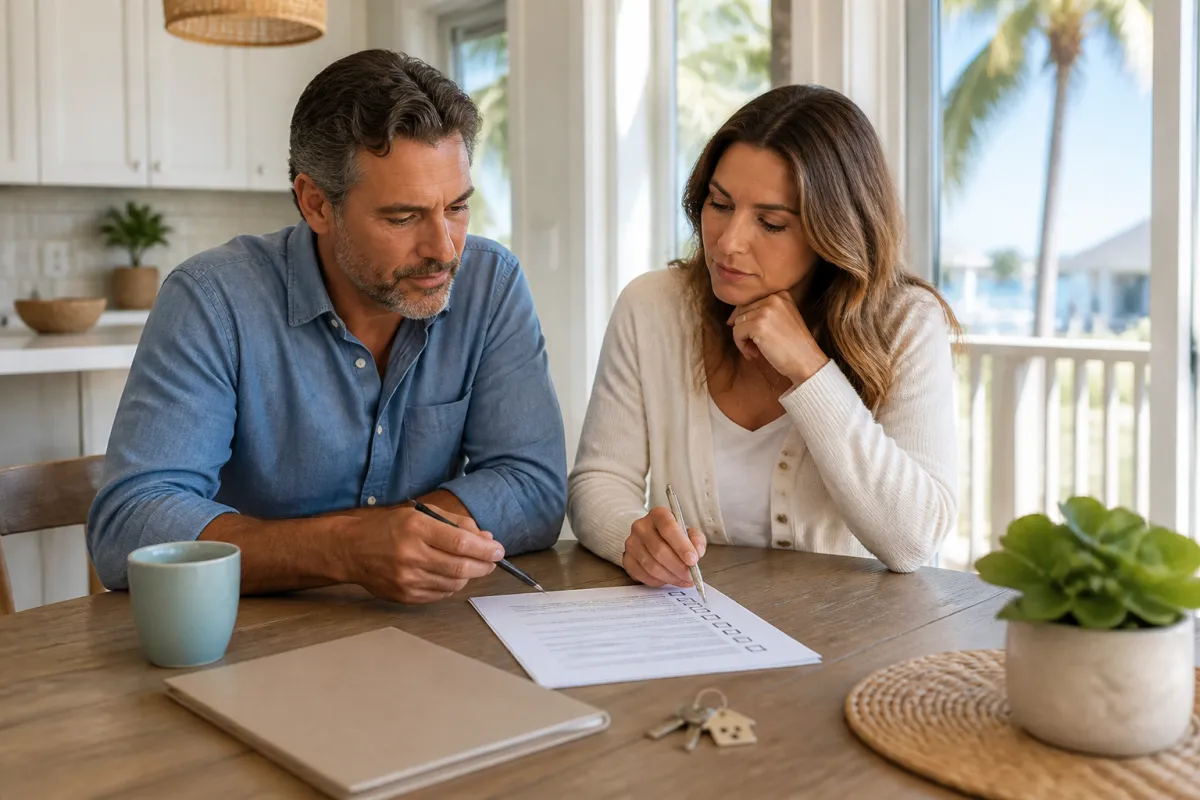
Yes. Unmarried partners can apply for a Florida mortgage together and buy a home together. The important decision is not only whether you qualify. Before making an offer, make sure the mortgage, deed, ownership shares, contributions, and plan for a separation or death are coordinated.
Mortgage liability, legal ownership, and a private co-ownership agreement are three different things. Your mortgage professional can discuss financing and underwriting. Your closing or title professional and a Florida real-estate or estate-planning attorney should guide title, survivorship, homestead, and agreement decisions.
Mortgage, deed, and co-ownership agreement answer different questions
The mortgage and promissory note establish who is responsible for repaying the loan.
The deed identifies the owners of the real estate and the form of ownership.
A co-ownership agreement can document how the partners intend to handle contributions, expenses, decisions, disputes, and an eventual exit. It does not replace the mortgage note or change what the lender can require.
Being on the mortgage does not by itself establish the ownership arrangement. Being on the deed does not automatically remove someone from responsibility for a joint mortgage. A private agreement between partners does not release either borrower from the loan.
The Consumer Financial Protection Bureau confirms that unmarried applicants may apply jointly. It also recommends discussing each person’s finances, contributions, and a written cohabitation agreement before applying. When two people are jointly responsible for a mortgage, each may remain responsible for the required payment even if the partners privately agree to split it. (consumerfinance.gov)
Decide how you will qualify before you shop
When both partners apply, the lender evaluates the application under the requirements of the selected loan program and lender. Income, assets, debts, credit history, occupancy, property type, and documentation can all matter. The result is not simply a matter of adding both incomes together. Existing debts, credit history, asset documentation, and the source of funds may affect the available options.
Applying jointly may make sense when both partners want their income or assets considered and are comfortable sharing loan responsibility. Start with a Florida mortgage preapproval before selecting a property. Each applicant should also organize the records needed for underwriting with this Florida mortgage preapproval document checklist.
Co-borrower versus co-signer
For two partners who intend to occupy the property and apply together, the lender may treat both as co-borrowers. A co-borrower generally signs the loan and shares responsibility for repayment. A co-signer also accepts loan responsibility, but the person’s ownership, occupancy, and ability to be included in the transaction can vary by lender and loan program.
Do not assume that helping someone qualify creates an ownership interest. Do not assume that being on title removes loan responsibility. Confirm the proposed borrower and title structure with the lender and closing team before signing a contract. For a different situation involving a person helping a primary occupant qualify, see Florida Mortgage With a Non-Occupant Co-Borrower: Co-Signer or Gift?.
Choose the Florida title structure deliberately
Florida recognizes several forms of co-ownership. The choice can affect survivorship, homestead, creditor, tax, estate, and transfer issues. It is not a decision a mortgage broker should make for you.
| Ownership form | General concept | Planning point |
|---|---|---|
| Tenants in common | Each owner holds a separate interest in the property. The interests may be equal or unequal if properly documented. | Florida generally treats a conveyance to multiple owners as a tenancy in common unless the instrument expressly creates survivorship rights. A deceased owner’s interest does not automatically pass to the other owner merely because the owners were partners. |
| Joint tenants with right of survivorship | Co-owners generally hold equal interests, and a deceased owner’s interest may pass to the surviving joint owner or owners when valid survivorship language applies. | Survivorship must be intentionally and validly established. It is not a substitute for reviewing homestead, creditor, tax, probate, and estate-planning consequences. |
| Tenancy by the entirety | A form of ownership associated with married couples. | Unmarried partners should not assume this form is available to them. |
Florida Statutes Section 689.15 provides that a conveyance to two or more people generally creates a tenancy in common unless the instrument expressly provides for survivorship, subject to the statute’s terms. The Florida Bar describes tenants in common as holding partial interests and joint tenants with rights of survivorship as holding equal interests with survivorship rights. (flsenate.gov)
Do not rely on either of these assumptions: “We are both on the mortgage, so we are both owners,” or “We live together, so the surviving partner automatically gets the house.” The deed and applicable Florida law control the ownership result, subject to the facts of the transaction.
If contributions are unequal, document the plan
One partner may provide more of the down payment, closing costs, renovation funds, or monthly expenses. A larger contribution does not automatically create a matching ownership percentage or guarantee reimbursement later.
If the arrangement is not a simple equal split, ask a Florida attorney whether the deed and a written co-ownership agreement should address:
- Each partner’s intended ownership share
- Down payment, closing costs, mortgage payments, taxes, insurance, repairs, and improvements
- Whether an initial contribution is intended as a gift, loan, reimbursable contribution, or basis for a different ownership interest
- How appreciation, equity, and sale proceeds are intended to be calculated
- Whether either partner may refinance, take out a home-equity loan, rent part of the property, or authorize major repairs without the other’s consent
- What records each person should keep
The CFPB specifically recommends discussing financial status, contributions, and a cohabitation agreement when unmarried people apply together. An agreement can reduce ambiguity, but it should be drafted or reviewed by counsel familiar with Florida law. (consumerfinance.gov)
Set an exit plan before you need one
If the relationship ends, the mortgage and title do not automatically change. The owners and lender must take the necessary steps to alter the ownership or loan arrangement.
A co-ownership agreement can address possible paths such as:
- Sale: Sell the property, satisfy the mortgage and transaction costs, and distribute any remaining proceeds according to the deed, agreement, settlement, and applicable law.
- Buyout and refinance: One partner may seek to buy the other’s interest and qualify for a refinance or another lender-approved way to remove the departing borrower from the existing obligation.
- Temporary shared ownership: One person may move out while both retain ownership for a defined period, with written payment, maintenance, occupancy, and sale terms.
- Dispute process: Establish a process for valuation, notice, mediation, and timing before either partner considers court action.
Transferring an ownership interest by deed does not by itself release a borrower from the mortgage. Until the lender formally releases a borrower or the loan is refinanced, paid off, or otherwise changed through an approved process, both borrowers may remain responsible for the loan. (consumerfinance.gov)
Florida law includes court procedures that may apply to disputes between co-owners, including partition issues. Whether a particular remedy is available or advisable depends on the deed, agreement, property, liens, and facts. Treat that as a legal question for a Florida attorney, not as a predictable mortgage option.
If you are considering a payoff or sale, this guide on getting a Florida mortgage payoff statement may help with the mortgage-related step.
Plan for death and survivorship early
An unmarried surviving partner does not automatically inherit the other partner’s interest in every situation. The result may depend on the deed, valid survivorship language, wills or trusts, Florida homestead rules, a surviving spouse or minor child, creditor issues, and other facts.
Joint tenancy with right of survivorship may allow a deceased owner’s interest to pass to the surviving co-owner, but the Florida Bar cautions that title should be considered alongside homestead rights, asset protection, tax consequences, estate planning, and lender requirements. With a tenancy in common, a deceased owner’s interest may pass through the owner’s estate rather than automatically to the other co-owner. (floridabar.org)
A death also does not make the mortgage disappear. The loan still must be addressed, and the surviving partner or estate may need guidance from the servicer, closing professional, and attorney. For mortgage-focused information, see What Happens to a Florida Mortgage When the Homeowner Dies?.
Coordinate with the right professionals before closing
In St. Petersburg, Pinellas County, and elsewhere in Florida, tell the loan team and closing agent that you are unmarried co-buyers, whether both people will occupy the home, and whether you expect equal or unequal ownership. Ask what documentation the lender will need for funds, large deposits, gifts, or a future transaction involving a buyout.
Your title or closing professional can coordinate the closing documents. A Florida real-estate or estate-planning attorney can advise on the legal consequences of the deed and co-ownership agreement. An owner’s title policy is a separate protection question worth reviewing before closing. See Owner’s vs. Lender’s Title Insurance in Florida, and review the Florida Closing Disclosure checklist before signing.
Questions to resolve before making an offer
- Will both partners apply for the mortgage, and will both be on title?
- Have you reviewed credit, debts, income, assets, and cash-to-close expectations together?
- How much will each partner contribute now and over time?
- How does the selected loan program treat the proposed borrower structure and source of funds?
- Have you discussed deed language with the closing agent and a Florida attorney if survivorship, unequal shares, or estate planning matter?
- Will a written co-ownership agreement address payments, repairs, buyout terms, sale, occupancy, and disputes?
- Do your wills, trusts, beneficiary designations, and other estate documents align with the ownership plan?
Official resources
- Consumer Financial Protection Bureau: Can two unmarried people apply jointly for a mortgage?
- Consumer Financial Protection Bureau: Buying a home on your own or with someone else
- Consumer Financial Protection Bureau: Mortgage key terms for co-signers and co-borrowers
- Florida Statutes, Section 689.15: Estates by survivorship
- The Florida Bar: Buying a Home
- The Florida Bar Journal: The Impact of Co-ownership on Florida Homestead
Compliance note: This article is educational only and is not legal, tax, title, estate-planning, or financial advice. Consult a Florida-licensed real-estate or estate-planning attorney and your closing professional about title, survivorship, homestead, co-ownership, and estate-planning decisions. Mortgage programs, terms, documentation, and ownership consequences vary by borrower, property, lender, and loan program. Financing is subject to underwriting and credit approval and is not a commitment to lend.